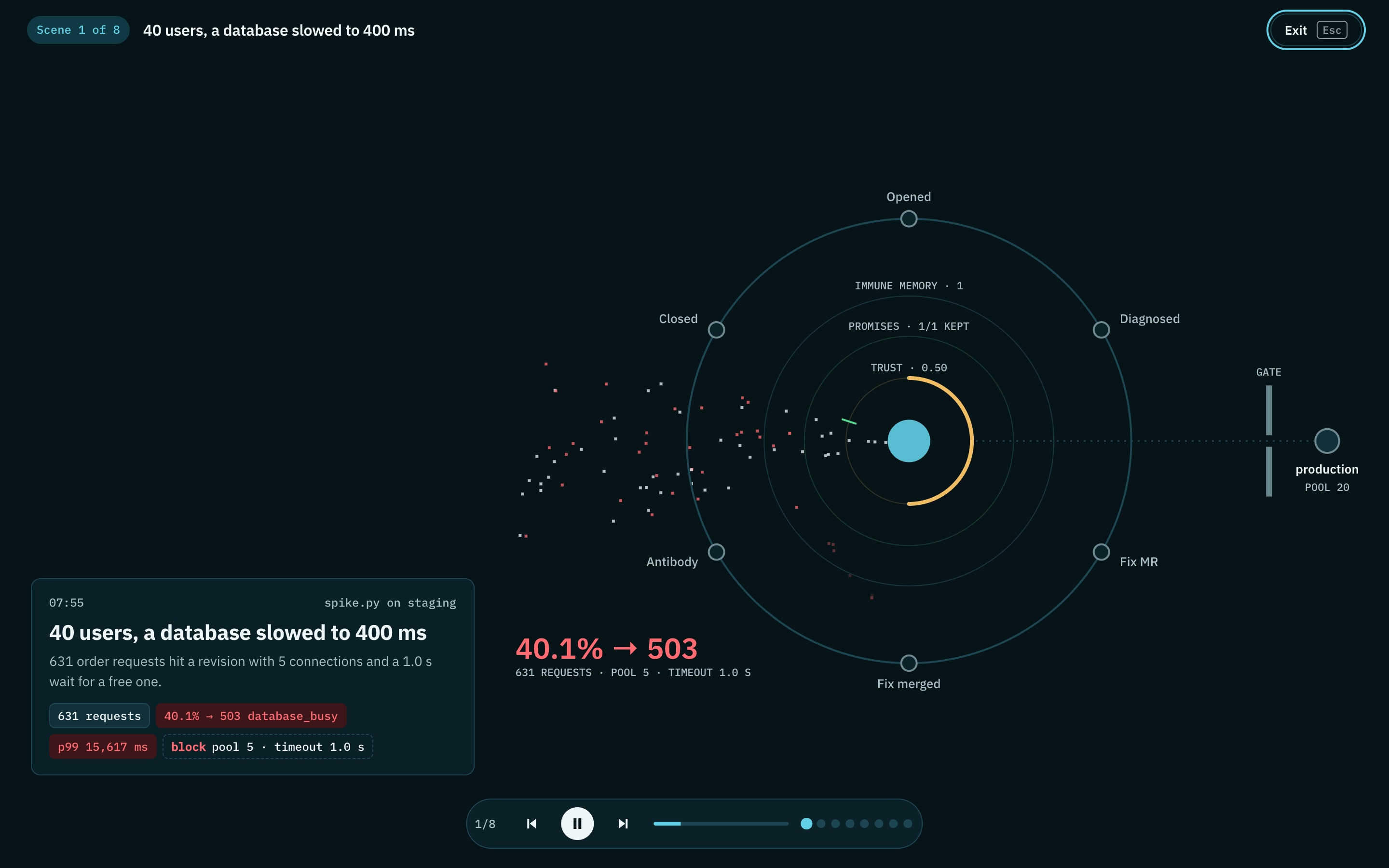
Fixed in three minutes
First the Incident Responder reads the incident, checks past ones and names the cause.
Then it writes the fix with a regression test.
Then the pipeline replays past incidents on a review revision, checks every promise and weighs the agent's earned trust.
Last, the canary sends 10% of production to the new version, then promotes it or rolls it back, and the agent's trust moves with the result.
What it runs on
The promise from issue #3: orders above $500 wait for verification. Check it against this service now.
GitLab Duo Agent Platform
- Incident Responder
- Close the Loop
- Contract Keeper
- Contract Breach
- Release Council
- Memory Oracle
- Code Review flow
- Fix CI/CD Pipeline flow
GitLab
- Merge request pipelines
- SAST and IaC scanning
- Secret detection
- Dependency scanning
- Container scanning
- Review revisions
- Environments
- Releases
- Approvals and labels
Google Cloud
- Cloud Run
- Cloud SQL
- Artifact Registry
- Secret Manager
- Cloud Monitoring
- Cloud Scheduler
- Workload Identity Federation
The memory
- Immune replay
- Living contracts
- Trust ledger
- Canary analysis
- Carbon per pipeline
- Read-only MCP server
A postmortem should start a memory.
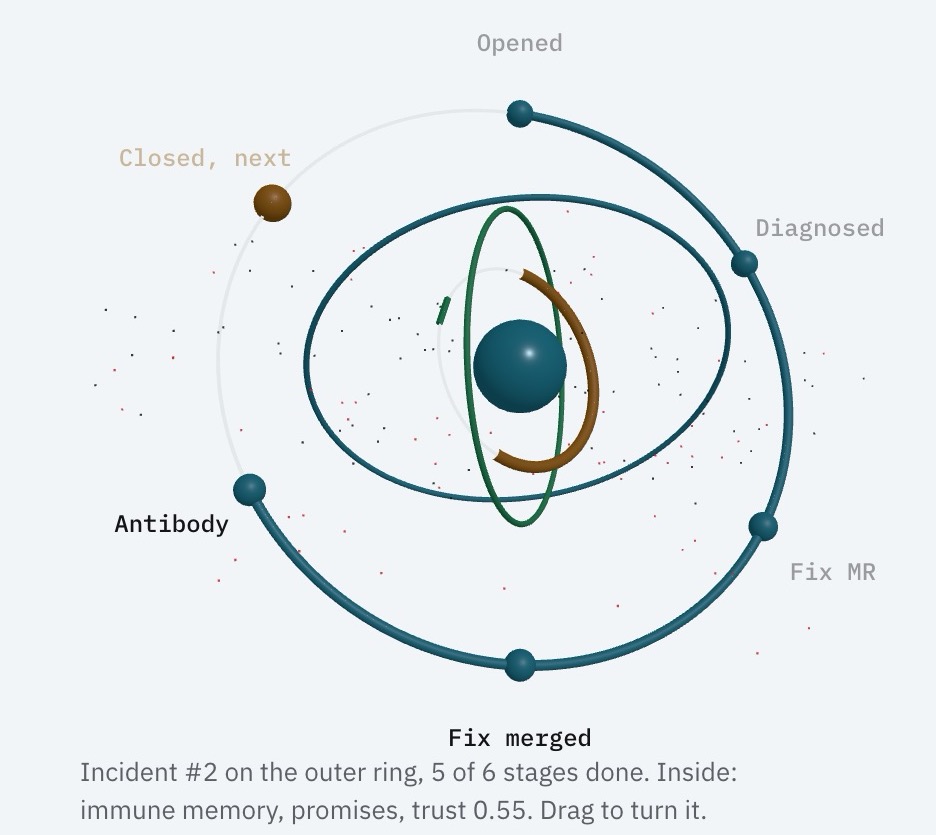
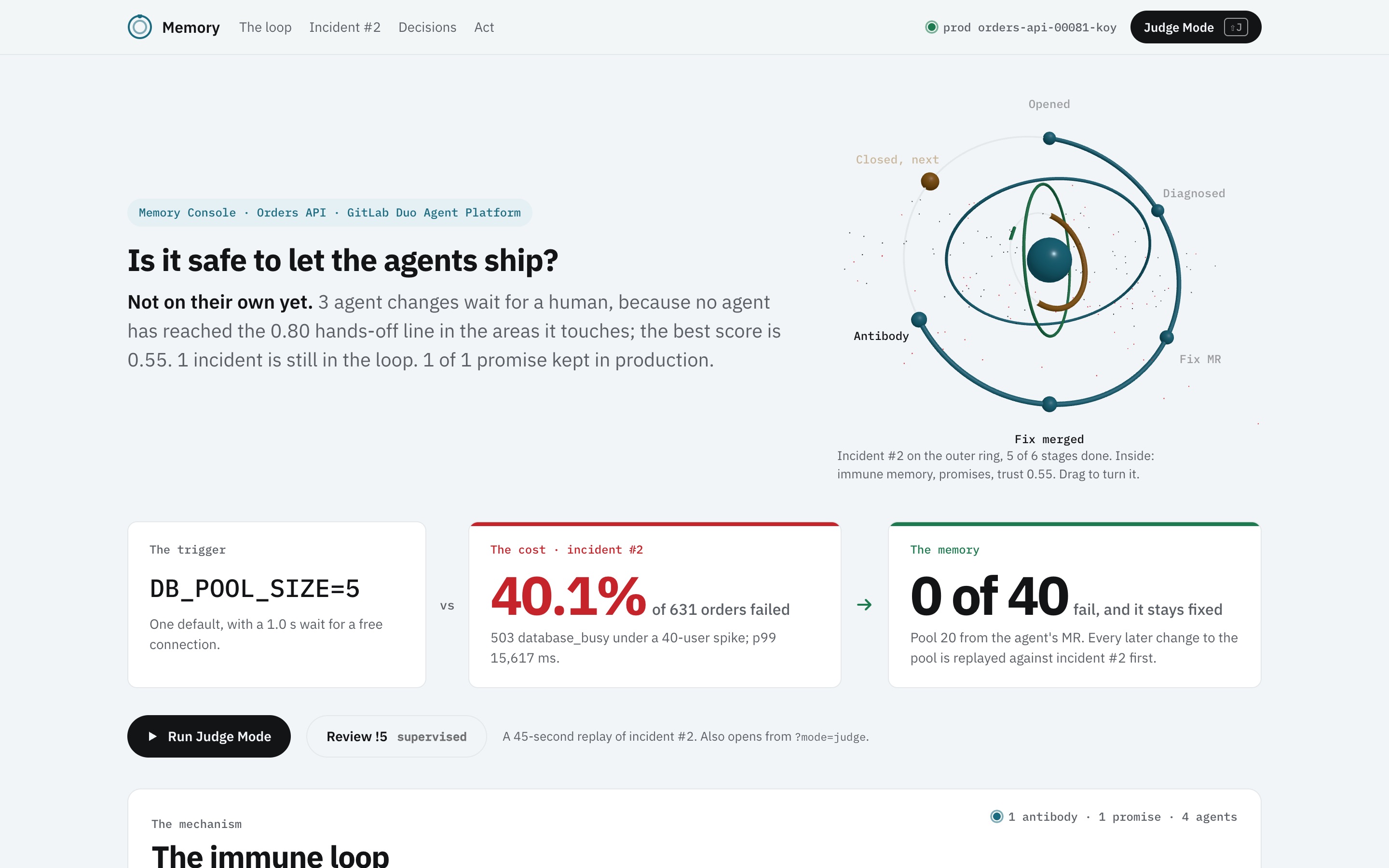
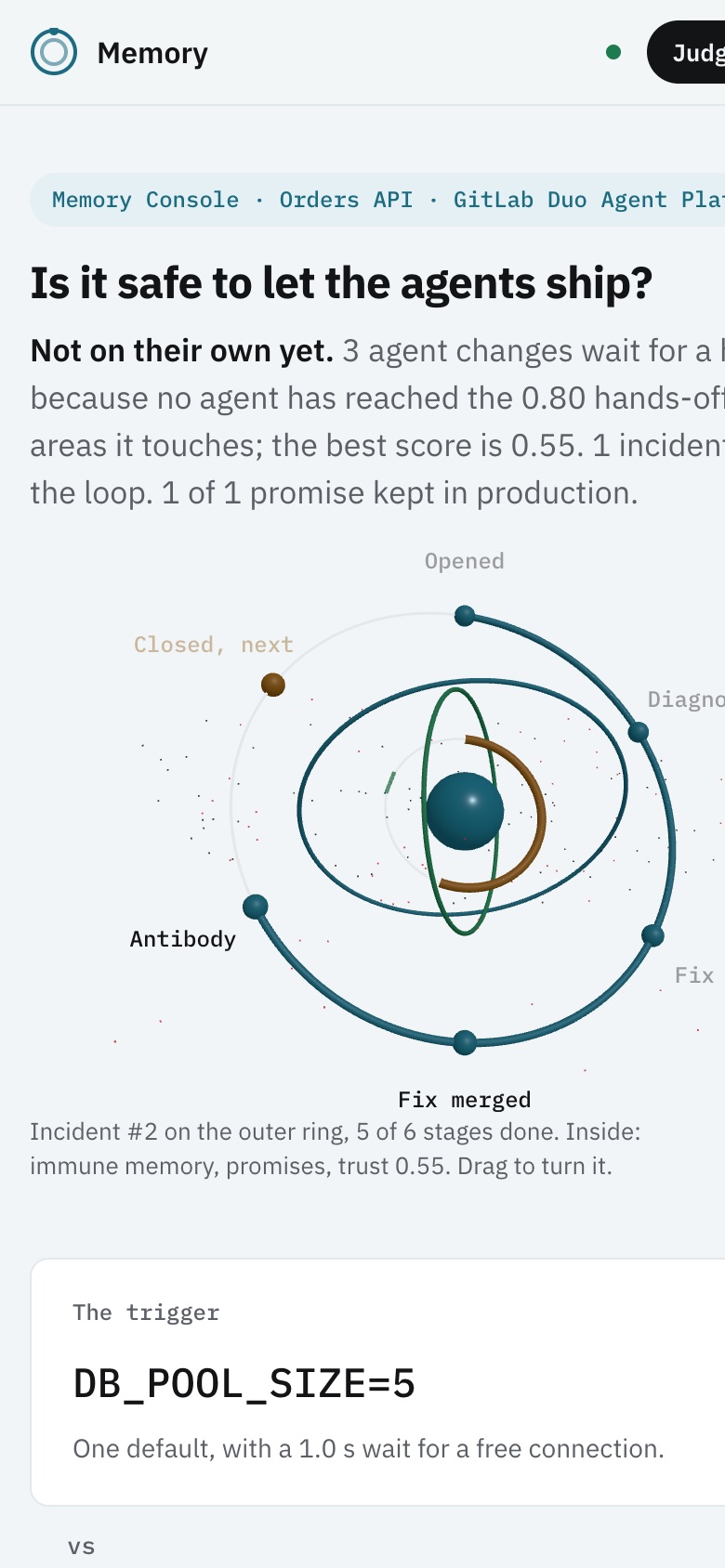
Here, every incident becomes a test that runs before each change, and every promise a check that runs against production. Production runs revision orders-api-00089-kix, with a database pool of 20 per instance. When MR !1 is approved, that number changes through the canary, and every later change to it is replayed against incident #2.
Open the Memory Console